Reading Didn’t Die. The Interface Did.
Rethinking How We Read
We’ve been blaming attention spans for years.
But what if the real issue is design?
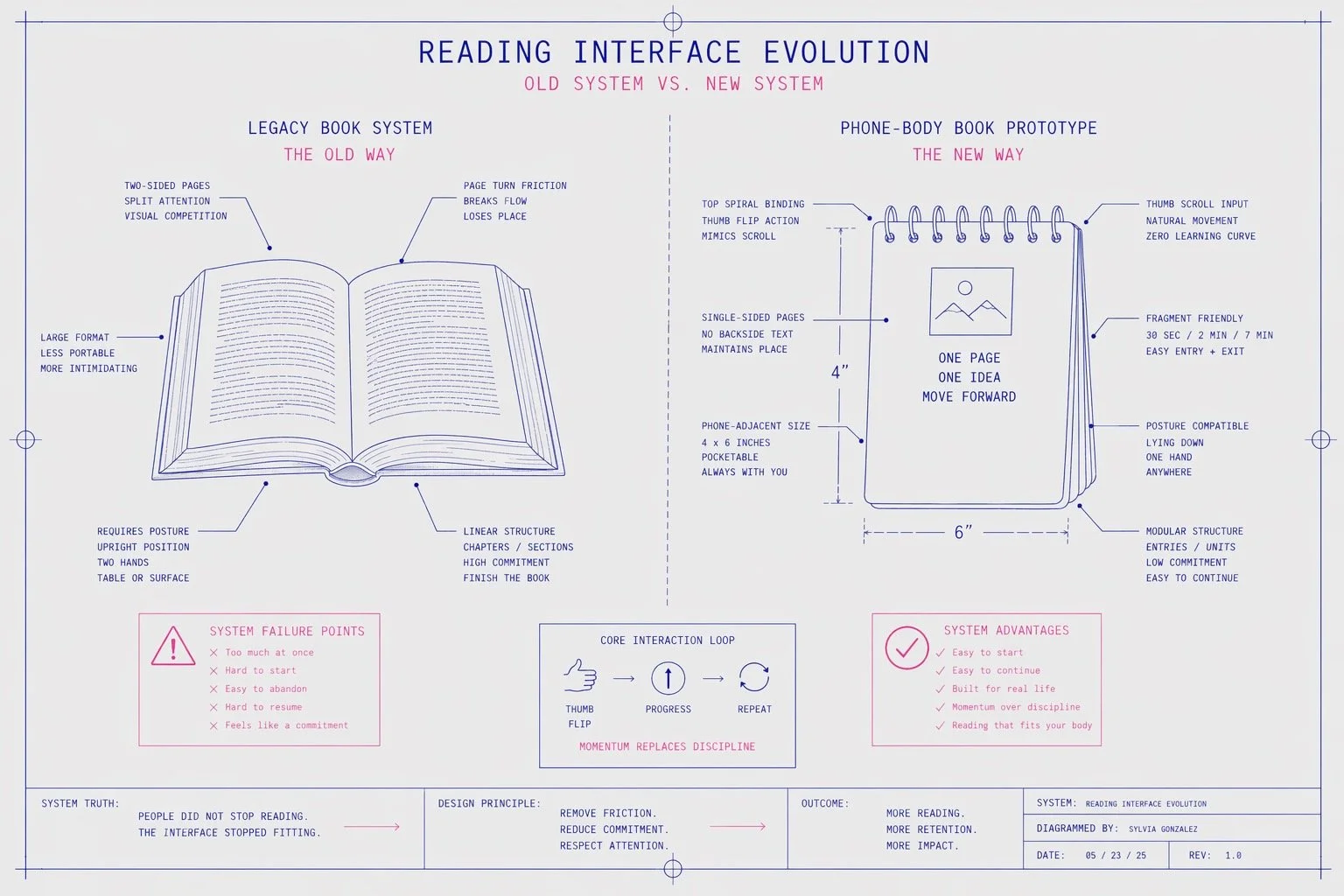
This diagram maps the friction baked into traditional books—two-page spreads, high commitment, physical constraints—and contrasts it with a more adaptive, phone-aligned reading system.
The shift isn’t about replacing books.
It’s about respecting how people actually move, think, and engage today.
Reading doesn’t need more discipline.
It needs better interfaces.
Continue Exploring